
The authority defends its record as wild dog attacks rise in the state's south
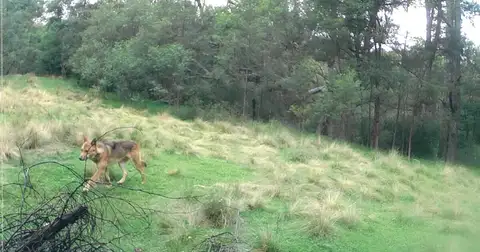
Local Land Services in the state's south have defended their wild dog control program, after landholders claimed government was not doing enough to manage pest populations.
At a wild dog and fox working group hosted in Taralga, concerns were raised that dog attacks on sheep had surged in the past year.
Bill Alders, Inverness, Bannaby, said wild dogs killed 104 of his sheep in 2025 and injured a further 70. This year, he said, 30 had been killed.
Mr Alders and other landholders including Paul Sharman and private wild dog trapper, Jarred Holmes, told South East Local Land Services representatives that they had "lost trust" in the department's ability to control the problem.
"Landholders reported the loss of 13 sheep and lambs across the Southern Highlands during the same 12-month period, though the true scale of losses is difficult to know as this data relies on landholder reports," a spokesperson said.
"The success of these control programs relies heavily on landholder participation to effectively reduce wild dog populations and lower the risk of livestock attacks.
"All land managers are strongly encouraged to participate in coordinated control programs to maximise their effectiveness."
The spokesperson said between February 2025 to January 2025, 2747 1080 baits were distributed across the Southern Highlands, and 23 wild dogs were also controlled through trapping programs.
The service is undertaking its annual autumn wild dog baiting programs across NSW, working with landholders to deliver "coordinated wild dog and fox control across public and private land".
"To effectively reduce wild dog and other pest animal impacts, landholders need to be carrying out their own integrated control programs, using more targeted methods and tools suited to their property, alongside these government coordinated programs," the spokesperson said.
"In the South East region, Local Land Services is working alongside 13 wild dog working groups and public land managers to coordinate community-led initiatives and facilitate aerial and ground baiting programs, which aim to reduce the impacts of wild dogs on livestock and native wildlife."
Despite this, landowners at the meeting said they were undertaking their own baiting and trapping.
South East LLS wild dog coordinator, Thomas Ross, said service was putting extra resources into wild dog control around Taralga, but anything further was a budgetary "balancing act".
Mr Alders will propose at an upcoming Queanbeyan meeting that the 13 wild dog group representatives direct wild dog control in the region, while South East LLS continues to fund and administer the program.
"We want to be effectively the directors of wild dog management because what we're seeing at the moment isn't acceptable," he told the Taralga meeting.
Landholders should report any wild dog activity, such as sightings, livestock attacks or losses and other signs to their Local Land Services biosecurity officer on 1300 795 299 or via FeralScan.
Thiruvananthapuram's stray dog relocation drive faces questions over transparency
Rain shows up the flaws in Inverloch's dog park
Fixing the street dog problem means working with animal welfare groups
Dogs take over the fairgrounds for the Lost Coast Kennel Club show
Ulster County SPCA shares a happy update on the Yorkie rescued from a breeding case
Meet Toffee, the husky-dalmatian mix who's also an escape artist