
Fixing the street dog problem means working with animal welfare groups
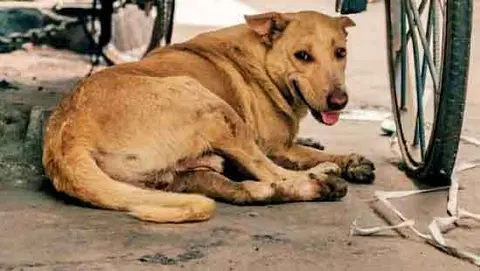
India's Supreme Court passed a series of key rulings on street dogs between August 2025 and May 2026 (photo credit Pic 1 Mani Gautam(L) Pic 2 Anurag Jamwal(R))
Drives launched by governments to eliminate certain undesirable phenomena are politically very convenient. Such programmes bolster people's faith in government at times when it begins to wane.
We already have the drive to eliminate dengue by 2030, and now the Department of Animal Production and Health (DAPH) and the National Rabies Control Programme have announced a drive to completely eliminate rabies by the same year.
This is laudable. But a public outcry arose after this announcement because it was linked to a 'don't feed street dogs' media campaign, causing animal welfare activists to react swiftly.
Social media posts by various government sources, including some pradeshiya sabhas (local government bodies) warned that feeding stray dogs was an anti-social, retrogressive activity because it was the main reason behind the 'street dog population explosion' we have seen in Sri Lanka over the past two decades.
There has always been a very vocal anti street dog lobby, and these official announcements fed fuel to the fire, with private social media posts urging people to photograph those seen feeding street dogs, and report them to the police. It looked like the start of a witch hunt.
Sri Lanka officially banned the culling of dogs twenty years ago, in 2006, replacing extermination by the most inhuman methods with a more humane CNVR (Catch-Neuter-Vaccinate-Release), Initially, most street dogs were caught, treated and released, with several foreign organisations, too, helping.
But before long, due to factors such as official apathy, and abandoning pups in the streets, we saw a proliferation of street dogs mainly in the cities but also in the countryside. The situation grew dire after the 2022 economic crash as people began abandoning their household pets.
Today, the number of street dogs is put as high as six million, but there is no exact census and the actual figure could be between one million to 1.3 million.
This puts those who feed and care for street dogs under terrific strain in these cash-strapped, high inflationary times. The main ojective of the government's anti-rabies seems to the gradual elimination of street dogs by neutralising those who feed them. Not getting food would weaken and gradually starve these dogs to death. When applied to people, this method is called genocide.
This is patently clear from all the social media posts made so far in favour of this rabies elimination campaign.
Before delving into the blatant inhumanity of this objective, let's see just how bad the rabies situation in Sri Lanka is.
In 2025, 14 rabies related deaths were recorded. This is the lowest figure on record, while 2024 recorded 20 confirmed deaths.
Compared to this, 56 people have died of dengue so far in 2026. Wild elephants killed over 100 people in 2025, while between 100-400 people die of snakebite any given year. What about deaths caused by alcohol-related driving? Overall traffic accidents claim an average of about 2,500 to 3,000 lives each year, with alcohol consumption identified as a contributing factor in roughly 4.5% to over 5% of investigated road traffic accidents. During this year's Vesak festival, a drunken double cab driver killed eight people waiting at a dan sal queue. Even if we take the lower figure of 2,500, we have 25 deaths per year due to alcohol-related driving accidents. But there is no debate or any no serious protest regarding the cause - alcohol consumption.
At the bottom of this anti-feline hysteria is the expense of anti-rabies treatment. The vaccines are expensive. The government allocates Rs. 2.5 billion each year strictly for mass dog and animal vaccination campaigns to target the disease at its source. Roughly Rs. 800 million annually goes toward treating individuals exposed to the virus. This incorporates post-exposure prophylaxis (PEP) medications and anti-rabies serums across state hospitals. Additional money is given to municipalities to catch dogs for vaccination and sterilisation.
By comparison, Sri Lanka spends an estimated national average of $242 per case on direct treatment and hospitalisation for dengue, while community prevention via vector control programs costs around $400,496 annually ($2 per person protected). If the country implements a national dengue vaccination strategy, that cost is projected to rise to $28.95 million annually.
The government health sector is cash-strapped and short of essential medicines. Many politicians, bureaucrats and doctors see rabies prevention as a waste of precious money. The problem here is really one of attitude. We stopped killing stray dogs using unspeakable methods only two decades ago. There are many in positions of power who see it as the easy way out of a thorny problem. But, since the culling of street dogs is now illegal, the easier course would be to starve them to death by intimidating the feeders.
How India looks at this issueBut those who think we have a serious rabies problem should look at India. India has an estimated 60-70 million street dogs, and up to 20,000 people die of rabies each year. But, like in Sri Lanka, many people are involved in feeding and caring for street dogs, though the task is overwhelming compared to resources.
In New Delhi, there are a million street dogs. India's Supreme Court passed a series of key rulings on street dogs between August 2025 and May 2026. Initially, it ordered that all street dogs should be removed to shelters. When animal welfare groups protested this would be impossible, a three-member bench ruled in May 2026 that all street dogs should be vaccinated, sterilised and returned to the streets.
This was both humane and logical. We should follow this example. A recent article in this paper by a group of animal welfare organisations highlighted the urgent need for a national animal action plan focusing on sterilisation and vaccination which should enlist the support of community feeders and welfare groups. This is common sense and a practical idea.
But they asked the question: "We are ready to work with the government: But is the government ready to work with us?" This is an important question. This writer has been a community feeder and care giver for street dogs and cats for three decades, and knows from first hand experience how lethargic municipality and other state dog-handling, anti-rabies bodies are. Even in better times, they lacked motivation, from vets down to dog catchers. What is primarily needed is motivation.
Under-utilised resourcesEach municipality has a dog catcher team. Over the years, I have seen them descending into grumbling and lethargy, complaining about the heat, and how hard it is to catch street dogs. They complain about lacking nets. The government should look into such needs. Once, I met the municipal vet in my area going around in an air-conditioned double cab, taking a census of stray dogs. They do have resources. But, After Covid, they began asking people to bring stray dogs in for vaccination and sterilisation, which is very difficult for individual feeders and caregivers.
Officials need to be motivated. Without that, the street dog issue cannot be solved no matter how much funding is available. and the government should have the good sense to enlist the help of animal welfare organisations and community feeders.

Thiruvananthapuram's stray dog relocation drive faces questions over transparency
Rain shows up the flaws in Inverloch's dog park
Dogs take over the fairgrounds for the Lost Coast Kennel Club show
Ulster County SPCA shares a happy update on the Yorkie rescued from a breeding case

Meet Toffee, the husky-dalmatian mix who's also an escape artist

Dogs notice when the clocks change, even if they can't tell the time