
Hummingbirds start heading north and should reach Virginia soon
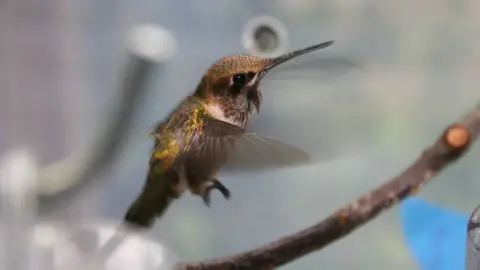
Va. (WSET) -- Spring's arrival is bringing some of the season's smallest long-distance travelers back to the skies.
The Southwest Virginia Wildlife Center says it won't be long before hummingbirds arrive in the region, as they are beginning their annual migration north.
They're just amazing to watch," said Chester Leonard, executive director of the Southwest Virginia Wildlife Center. "We love their interaction, how fast they are. The fact that they're migratory -- we don't have them here year-round -- makes it really special."
Though tiny, hummingbirds travel extraordinary distances. Some species fly thousands of miles each year, including nonstop trips across the Gulf of Mexico.
They go several thousand miles. They're incredible flyers," Leonard said. "They can hover in place, but they can also travel significant distances. They really are remarkable birds."
There are more than 350 hummingbird species worldwide, with about 15 found in the United States. In Virginia, the ruby-throated hummingbird is the most common. Males are easily identified by a bright red throat.
READ ALSO: Wildlife experts warn of contagious eye disease spreading among backyard birds
Wildlife experts say males typically arrive first, followed shortly by females. While rare, other species may occasionally be spotted, including Rufous or Allen's hummingbirds, which can be blown off course during migration.
Hummingbirds also have an impressive memory and often return to the same feeders year after year. For people hoping to attract hummingbirds, experts say feeder maintenance is essential.
"Keep it simple, and you're going to get the best results," Leonard said.
Below you can read some tips from the Southwest Virginia Wildlife Center.
Wildlife experts recommend cleaning feeders every three to five days using a mixture of one part bleach to 10 parts water, including cleaning the inside thoroughly.
For nectar, the center recommends a water-to-sugar ratio of one-quarter cup of sugar to one cup of water. Bring the solution to a boil, then let it cool before putting it out. Leftover sugar water can be refrigerated for up to a week.
The center warns that dirty feeders can develop a fungus that causes a hummingbird's tongue to swell, preventing the bird from being able to withdraw its tongue. The condition, called Hummers Candidiasis, means the birds can't eat and will slowly starve to death.
The center also advises people not to use dyes, honey, molasses or raw sugar. If syrup looks cloudy after being stored for a long time, it should not be used. Feeders also should not be placed in direct sunlight, which can cause the sugar water to spoil faster.

At least 655 pigeons shot at London Tube stations during a cull

The seven-year-old behind the viral bird calls reveals what's next
What a trip to the Falklands taught me about penguins
One simple change will keep small birds coming to your birdbath all summer
Pigeons cracked a problem built to defeat rule-followers, and it says something about AI

Florence County Library brings in an exotic animal rescue