
Gardening with birds: how to bring them in and what to feed them
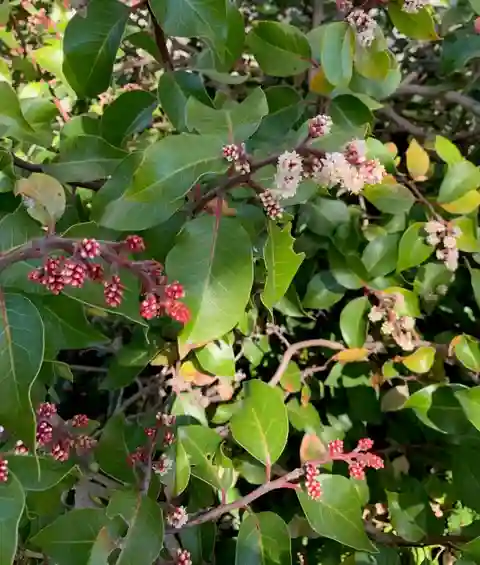
Gardeners often welcome birds as additions to the garden. Conversely, birds use our gardens as food sources and nesting opportunities.
In this column, we introduce the topic of gardening with birds, emphasizing bird identification, birds as garden art and plants that feed birds. In a later column, we will look into ways that gardeners invite birds into their gardens by providing food and housing.
Identifying birds in the gardenAccording to the National Audubon Society, California is home to 600 bird species, representing about two-thirds of the United States' bird species. The number of commonly seen bird species is 450. For information, visit Birds of California (audubon.org/california/birds).
Bird species can be grouped into different categories: garden and neighborhood birds, coastal birds, wetland and lagoon birds, and raptors.
The Santa Cruz Bird Club includes in its "300 Club" birders who have seen 300 different bird species (santacruzbirdclub.org).
Based on my prompt to ChatGPT, here's a list of the birds that most Monterey Bay area gardeners encounter:
1. California scrub-jay: One of the most conspicuous local birds. Intelligent, noisy and common in gardens and oak woodlands.
2. Anna's hummingbird: Present year-round. Frequently visits salvias, aloes, grevilleas and other nectar-rich plants.
3. American crow: Common in urban, suburban and agricultural settings.
4. House finch: A familiar feeder bird and frequent visitor to gardens.
5. Dark-eyed junco: Especially abundant in winter.
6. Northern mockingbird: Often sings from rooftops and tall shrubs.
7. American robin: Common in lawns and parks.
8. Mourning dove: Frequently seen feeding on the ground.
9. Bushtit: Tiny gray birds moving through shrubs in flocks.
10. Red-tailed hawk: One of the most common hawks in North America.
For information on these birds, visit the National Audubon Society's "Guide to North American Birds" (audubon.org/bird-guide =california).
To identify a bird that you see in your garden, download Cornell University's Merlin Bird ID tool. This is a free app available for Android and iOS. It identifies birds through either a photo, a sound recording or responses to three questions about the bird. This is a powerful resource, used by over 5 million users. Read more and download the app at merlin.allaboutbirds.org.
Another resource is Audubon's Bird Guide app. Visit audubon.org/app and click on the link for either the Apple App Store or Google Play. After downloading the app, click the "Start Bird ID" icon and use the filters to narrow your search to the characteristics of the bird you are observing and would like to identify.
A relatively new, artificial intelligence-powered resource can be downloaded from birdidentifier.net. This tool uses Gemini AI to process bird images for identification. It supports photos from your cellphone camera or file photos in either of the other widely used image formats: Joint Photographic Experts Group (JPEG) or Portable Network Graphics (PNG). This resource requires users to register with their email address and a password. It states that it does not share the user's personal information. This tool was built by Daan Barnard in 2026.
Birds eat the berries of plantsFirst, let's focus on native California plants.
Shrubs and small trees:* Toyon.* Coffeeberry.* Hollyleaf cherry.* Elderberry.* Red elderberry.* Lemonade berry.* Sugar bush.* California wild rose.Groundcovers, smaller shrubs and vines:* Bearberry.* Manzanita.* Snowberry.* California wild grape.Develop these native, fruiting plants to create a nearly year-round bird habitat garden on the Central Coast. Here are the fruiting seasons of the best choices of California native plants.
* Summer: manzanita, wild grape, elderberry.* Late summer to fall: coffeeberry, lemonade berry, hollyleaf cherry.
* Fall to winter: toyon, California wild rose.
* Winter to spring: snowberry (persistent fruit), remaining toyon berries.
Here are lists of non-native fruiting plants that birds would like to discover in your garden. You can review these lists to compile a consolidated list without duplicate entries.
Visit Homestead How-To (homesteadhow-to.com) and search for "16 Berried Plants to Grow to Attract All Kinds of Birds."
Visit Better Homes & Gardens (bhg.com) and search for "19 Berry-Producing Plants That Will Attract Birds to Your Yard."
Visit Backyard Garden Lover (backyardgardenlover.com) and search for "17 Berries That'll Attract Birds to Your Yard."
Advance your gardening knowledgeThe Monterey Bay area has habitats for birds of all categories. A significant garden environment for hummingbirds and many other garden-related birds is the University of California Santa Cruz's Arboretum and Botanic Garden. Visit arboretum.ucsc.edu/visit/birding-at-the-arboretum for links to these exceptional documents: "A Visitor's Guide: Birds of the UCSC Arboretum & environs," credited to Steve Gerow, Todd Newberry and David Suddjian; and "Field Guide to Birds of UC Santa Cruz," by Benny Jacobs-Schwartz.
Sophie Wood Brinker, a local bird lover and graduate of the science illustration program at California State University, Monterey Bay, has provided a new resource for gardens and others interested in gardens in this area: "Birds of Santa Cruz." This book, with images and descriptions of 25 local birds, has been published by Heyday Books, an independent nonprofit publisher in Berkeley, and is available in bookstores and Amazon.
Additional resources already mentioned: Santa Cruz Bird Club (santacruzbirdclub.org) and National Audubon Society (audubon.org).
Enjoy the birds in your garden!
At least 655 pigeons shot at London Tube stations during a cull
The seven-year-old behind the viral bird calls reveals what's next
What a trip to the Falklands taught me about penguins
One simple change will keep small birds coming to your birdbath all summer
Pigeons cracked a problem built to defeat rule-followers, and it says something about AI

Florence County Library brings in an exotic animal rescue