
Cane toad or native frog? Here's how to tell them apart
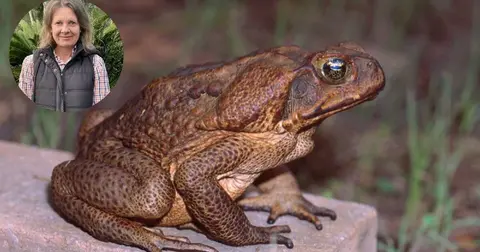
An unwelcome warty Queensland tourist provided quite the surprise for a person at a local caravan park recently.
There sitting at their front door was a cane toad.
NSW Department of Primary Industries and Regional Development (DPIRD) invasive species officer Lisa Wellman suspects the toad - a species known to be attracted to lights - was drawn to the door by a light and was waiting to catch bugs.
Discovered on March 7 at a caravan park in Bingara, it is the first reported sighting in the region in the past year and, Mrs Wellman said, not cause for alarm.
"It's more than likely it's just been accidentally transported," she said.
Receiving reports of cane toad sightings every week (across the state), sometimes it does point to a more endemic problem but more often than not, she said, it is associated with people travelling through areas where cane toads are widespread.
"It's as simple as having gear on the ground and then when you're packing things up they inadvertently get put into stuff," she said.
"But we don't know in every instance how that actually happens because most of the time people are going to be completely unaware that they've even got a cane toad hitch-hiking a ride."
She cited as a "classic example" a few years ago when someone found a cane toad in a shopping centre car park in Tamworth.
"Literally someone was in the car park and saw it and thought I better pick that up, that doesn't look right," Mrs Wellman said.
"And that's exactly how it happens. It can be very random places."
In 2020, two young Tamworth residents captured a toad in North Tamworth.
There have also been confirmed identifications in Armidale, Moree and Glen Innes.
To Mrs Wellman's knowledge it's the first at this specific location.
The DPIRD has a designated online reporting system for sightings of cane toads called ToadScan (feralscan.org.au/toadscan).
Some of the information it asks for includes a GPS location of where they saw it or found it, a photo of the animal, whether they have it in their possession or not, and whether it's alive or dead.
In the case of the latter, she said, they still want to know about it as it could point to larger populations in the vicinity.
"We want to encourage everybody to report when they see something because we don't want things to establish," she said.
She stressed the importance of - when possible - including a photo.
"We really need to have a photo because we so often get these cases of Banjo Frogs and Peron's Tree Frog's being mistaken as cane toads," Mrs Wellman said.
The Banjo frog - also known as the Pobblebonk frog - is the common one in this area.
She said misidentification is quite common, and unfortunately, in some instances, people take it into their own hands to euthanise the animal before getting an ID.
Known for their dry warty skin and brownish colouring, Mrs Wellman said cane toads have several distinctive features such as the glands either side of their head that contain the toxins.
They also have a bony ridge that runs across the front of their face, which if you look at face-on makes out a capital M.
Perhaps less obviously, they don't have the pads on their feet enabling them to jump onto windows like their frog cousins.
"So if anybody sees a frog sitting on a window or a sliding door it can't be a cane toad," she said.
"They can't stick to things."Generally adult cane toads will grow to about 10-15cm.
The largest documented cane toad in Australia was found in Queensland in 2023.
Aptly nicknamed 'Toadzilla', it weighed 2.7kg and was the size of an average football.
Mrs Wellman said they are more active at night. During the day they will try and seek shelter and are prone to finding places they can hydrate such as watering trays under pot plants; water troughs; and pet water dishes.
She said they are safe to pick up but advised wearing gloves and being gentle when handling them. It's when they feel threatened that they release their toxin.
If not comfortable picking them up you can use a bucket or a container to stop it moving away.