
Pig performance on the farm is the real test of soybean meal quality

Commercial feeding trials and producer observations around the world show how consistent U.S. Soy supports growth, feed efficiency and customer confidence
For swine producers and feed mills competing in increasingly skeptical and margin-conscious markets, soybean meal quality is about far more than price per ton. According to industry leaders, consistent U.S. Soy quality is helping feed mills strengthen customer trust, improve pig performance and differentiate themselves in competitive markets through measurable on-farm results.
That message came through clearly from Thomas D'Alfonso, Ph.D., Worldwide Animal Nutrition Focus Area Director for the U.S. Soybean Export Council (USSEC) and Teertach Robert Laovoravit, Director of Olive Hill Innovation Company in Thailand and Head of International Trade and Procurement for United Feed Mill.
For Laovoravit, whose family business has worked with independent swine producers in Thailand since 1989 and is expanding into Vietnam, the conversation around soybean meal quality ultimately comes down to what producers can observe in their own barns.
"We believe that our customers' pigs tell our story for us," Laovoravit said. "We asked customers not to believe our claims, but to see for themselves by showing them that we're not only confident in our claims of quality feed but also display our trust in them to buy our feed under good results. By trusting our customers first, it allows us to build the foundation of our relationship with customers who truly seek to work with us over the long term."
Moving beyond ingredient priceD'Alfonso said feed mills and producers often focus too heavily on ingredient price while overlooking the total economic impact of ingredient quality.
"What's often overlooked when we talk about price is cost," D'Alfonso said. "One ingredient may be priced higher than another, but you're using it to formulate a diet that provides essential nutrients like essential amino acids, metabolizable energy, digestible energy and the other benefits that come with the ingredient."
He explained that highly digestible soybean meal derived from U.S. Soy can lower overall feed costs and improve animal performance, allowing pigs to convert nutrients into animal protein more efficiently.
"Price is just one of those factors," he said. "It really comes into play when you consider the benefit to lowering feed costs and improving animal performance."
According to D'Alfonso, the consistency associated with U.S. Soy begins long before the beans arrive at a feed mill.
"It is the sustainable farming practices of the U.S. Soy farmer that leads to a consistent product that's highly digestible," he said.
He described how family-owned U.S. farms use precise input management and long-term land stewardship to produce soybeans with lower variability and more consistent nutrient composition from year to year.
D'Alfonso also highlighted differences between U.S. soybean production and production in tropical climates.
"The beans in the United States are dried naturally in the field by the sun," he said. "Whereas in tropical climates, particularly very humid climates like Brazil, the beans are harvested at a very high moisture level and require mechanical drying."
That drying process, he explained, can create heat damage and moisture variability that ultimately negatively affect nutrient digestibility and feed consistency.
Consistency builds feed mill credibilityFor feed mills trying to establish themselves in new or skeptical markets, Laovoravit said ingredient consistency plays a direct role in building long-term trust with producers.
"Farmers have all heard it before," Laovoravit said. "They've all been told this technology will reduce mortality or this machine will fix all your problems."
Because producers are constantly exposed to sales claims, Laovoravit believes credibility must be earned through visible on-farm performance.
"How do you help customers see that you're the real deal?" he asked. "And how do you build trust with people who have faced so many dishonest people?"
His answer is practical demonstrations using commercial farm trials.
United Feed Mill conducted 28-day side-by-side feeding trials comparing feed produced with U.S. No. 1 soybeans against soybeans from other origins. According to Robert, the differences were measurable.
"We found that U.S. Soy has an advantage, showing an increase of 50 grams of average daily gain (ADG) and 0.14 in feed conversion ratio (FCR) improvement and 1.4 kilos of additional animal weight at the end of our trial period," he said.
For experienced swine producers, Laovoravit said feed quality becomes apparent quickly.
"Many experienced farmers can tell you the quality of the feed within the first three days," he said.
"On the first day, they can see the palatability of the feed," Laovoravit explained. "On the second day, they can see if there's any bacteria contamination by noticing if there's any diarrhea. On the third day, they can see if the animals develop a cough from the mycotoxins."
He emphasized that producers who know their pigs well do not necessarily need lengthy research trials to recognize feed quality differences.
"A good indication of good feed can be determined in just a few days," Laovoravit said.
Digestibility and pig health advantagesD'Alfonso said the nutritional value of high-quality soybean meal extends beyond traditional expectations.
"We're learning a lot about new functional compounds in soybean meal," he said, referencing peptides, terpenoids, polyphenols and isoflavones.
"These ingredients help the digestive and immune systems," D'Alfonso said. "They're immune modulators and anti-inflammatory compounds, and these high-quality characteristics lead to better animal health and pig performance."
According to D'Alfonso, functional compounds can support better respiratory health and greater resiliency during heat stress while helping producers maintain more consistent animal performance.
He also warned against relying solely on crude protein measurements when evaluating soybean meal quality.
"Nutritionists should be formulating based on digestible amino acids and digestible energy," D'Alfonso said. "This is much more accurate than crude protein measurements, and it's the path to lower-cost feed and better animal performance."
Look at revenue, not just feed costBoth speakers stressed that feed decisions should be evaluated based on overall production economics rather than ingredient costs alone.
"When we're talking about profitability, and what's nourishing your business, revenue is more than half of the profit equation," D'Alfonso said.
He said improvements in growth rate, feed efficiency, animal health and herd uniformity all contribute directly to greater revenue potential.
Laovoravit agreed and noted that poor-performing feed creates hidden opportunity costs for producers.
"Even if you want to look at just cost, you need to think about the opportunity cost," Laovoravit said. "If your feed isn't performing well and you're not getting good ADG, the pig barn is going to be used longer instead of being rotated more frequently - it's going to be stuck with certain animals that require more time to hit target weights."
Supply chain advantages matterLaovoravit said visiting the U.S. Midwest during harvest helped him better understand why U.S. Soy maintains its reputation for consistency.
"One thing that truly surprised me when I was visiting the upper Midwest in the Dakotas was how the grain was stored," he said.
Coming from a tropical climate, Laovoravit initially found it difficult to believe soybeans could be safely stored outdoors under tarps.
"For someone from a tropical environment, like myself, it's an unthinkable way of storage for us," he said. "I had to be convinced that this was a sound way of storing beans. Our U.S. hosts explained that the natural dry climate and the winter's freeze is what makes this all possible."
D'Alfonso added that the strength of the U.S. system extends well beyond farm production.
"It is not just the sustainable practices of the U.S. Soy farmer," he said. "It is the cooperators in the entire supply chain that are passing that high quality product from point A to point B and C and D."
He pointed to the U.S. transportation infrastructure, including the three R's - roads, rivers, and railways - as a major advantage in reducing physical damage during transport and handling.
Laovoravit acknowledged that Brazil continues improving its grain handling infrastructure and port facilities, but he believes the U.S. retains long-term advantages tied to climate and logistics.
"The Midwest is in a temperate climate that will continuously have an advantage in the storage and transportation of grain," Laovoravit said.
At the same time, he cautioned that maintaining U.S. Soy's reputation requires continued focus on quality and long-term thinking.
"We should all try to think about the long-term impacts, especially the reputational impact of American soybeans," Laovoravit said.
Building partnerships with producersFor Laovoravit, ingredient quality ultimately connects back to producer relationships and creating a culture where feed suppliers and farmers work together for mutual success.
"When we use good quality ingredients, it shows to our customer that we don't just care about making the sale," he said. "We care about their performance. We care about them and their ability to make a profit."
That trust has allowed United Feed Mill to host producer education events focused on biosecurity and management improvements while encouraging producers to share ideas and experiences with each other.
Laovoravit believes that collaborative mindset is critical in today's swine industry.
"Let's survive this and grow together instead of the mentality of let's see how much money we can make off them," he said.
For skeptical producers or feed mills considering a change in soybean sourcing, Laovoravit's advice remains simple.
"You don't actually know it until you see it for yourself," he said. "Pigs don't lie. If they like something, they'll eat it. If they don't like it, they won't eat it."

Police in Ho Chi Minh City stop two trucks carrying over 200 pigs positive for salbutamol
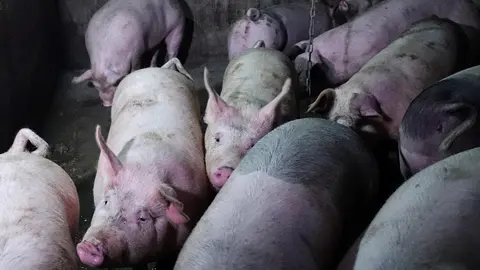
Veterinary department culls 31 pigs at Rohit Sahu's farm
Illa Langi's paddock-to-plate pork is starting to pay off

The time Sam Neill did yoga with his pig

This World Cup season, the goal is stopping African swine fever
Feral pigs tear through farmland in New South Wales