
TikTok clip leads scientists to a new translucent eel under India's plains
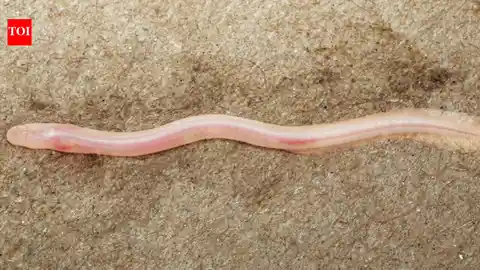
Scientists in India have described a new species of colourless, subterranean earthworm eel after its discovery began with an unlikely clue: a short video posted on TikTok. In 2024, researchers came across footage showing a tiny, unusual fish emerging from a water borewell near the India-Nepal border. The animal immediately stood out because no stygobitic fish, meaning fish adapted to living permanently underground, were known from the region. The researchers then tracked down the location shown in the video and began searching local borewells for physical specimens. Their fieldwork proved remarkably difficult. At one borewell in Bihar, the team manually pumped about 2,000 litres of water before a damaged specimen emerged, followed by an intact specimen after another 500 litres. Genetic analysis and micro-CT scans ultimately showed that the animal represented not only a new species, Gangaichthys indonepalicus, but an entirely new genus of earthworm eel, as mentioned in the published study titled Gangaichthys indonepalicus, a new genus and species of miniature stygobitic earthworm eel (Synbranchiformes, Chaudhuriidae) from alluvial aquifers in the Indo-Gangetic Plain, Bihar, northern India.The investigation began when researchers encountered a 2024 TikTok clip showing a slender, pale fish emerging from a borewell near the India-Nepal border. Its unusual appearance immediately caught their attention because there were no known stygobitic fish from the region. Rather than treating the footage as an isolated curiosity, the team tracked down the borewell shown in the video and sought permission from its owner to investigate further. The research was carried out by an international team involving scientists from the Thackeray Wildlife Foundation in Mumbai, Shivaji University, the Shanghai Synchrotron Radiation Facility at the Chinese Academy of Sciences and the Zoological Survey of India. Their findings were published in ZooKeys in a study describing Gangaichthys indonepalicus as a new genus and species of miniature stygobitic earthworm eel from alluvial aquifers in Bihar.Finding an actual specimen was considerably harder than identifying the fish in the video. Researchers had to locate suitable handpumps and borewells, obtain permission from their owners and then manually extract large quantities of groundwater while searching for the animal. At the borewell that produced the type specimens, the first fish emerged after approximately 2,000 litres of water had been pumped out, but it was damaged during the process and died immediately. A second specimen was recovered from the same borewell after an additional 500 litres had been extracted. That intact specimen was subsequently designated as the species' holotype, the individual specimen used as the formal reference for describing a new species. The effort illustrates one of the major difficulties of studying subterranean ecosystems: even when researchers know an organism exists, reaching the underground habitat where it lives can be extremely challenging.The newly described eel is only about 4 centimetres long and has several features associated with life in darkness, including a translucent, unpigmented body and reduced eyes covered by skin. Researchers also found an apparent absence of ribs. Micro-CT scanning and genetic analysis confirmed that the animal belongs to the earthworm eel family Chaudhuriidae but represents a completely distinct genus and species. The genus name Gangaichthys means "fish of the Ganga", reflecting the importance of the Ganges to the region, while the species name indonepalicus refers to its occurrence near the India-Nepal border. The researchers describe it as the first stygobitic fish recorded from the Indo-Gangetic Plains and the Gangetic Basin. The discovery also highlights how little scientists know about India's subterranean biodiversity. Because underground aquifers are difficult to sample, researchers say many species could remain undiscovered beneath the country's diverse landscapes.